
In today’s fashion world, brands need more than just big names to win Gen Z’s attention; they need cultural relevance.
Two major campaigns in 2025 proved this point: American Eagle’s collaboration with actress Sydney Sweeney and Gap’s bold partnership with KATSEYE.
While Sweeney’s collab drew headlines, it also faced backlash, leaving American Eagle struggling to maintain momentum.
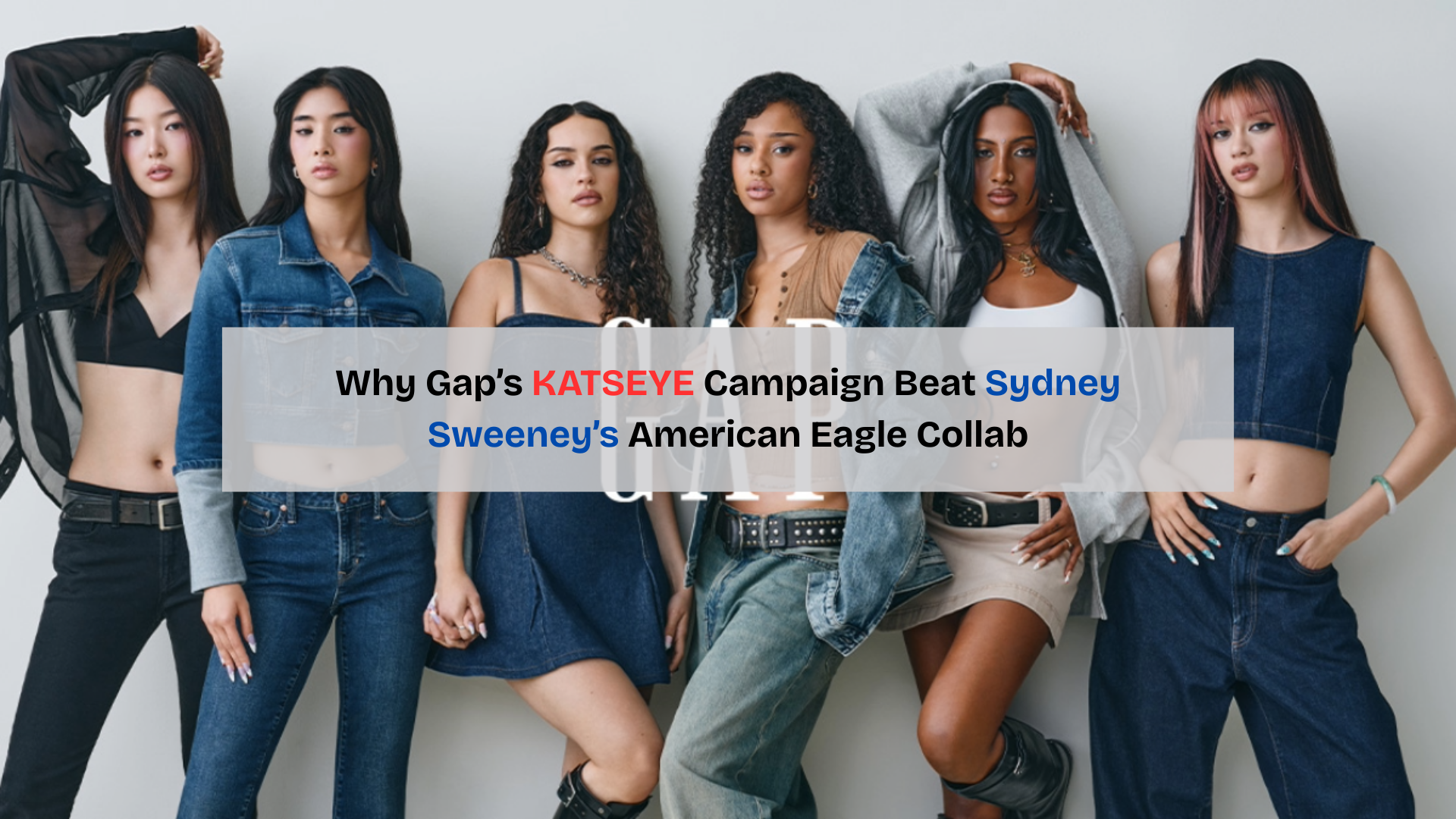
Gap, on the other hand, tapped into the unstoppable influence of K-pop, turning its campaign with KATSEYE into a viral success.
Here’s why Gap’s strategy resonated more powerfully.
Sydney Sweeney’s American Eagle Partnership: Why It Sparked Mixed Reactions
When American Eagle announced Sydney Sweeney as the face of its new campaign, the choice seemed like a safe bet.
Sweeney is one of Hollywood’s rising stars, best known for her roles in Euphoria and The White Lotus.
Her popularity with young audiences, combined with her growing influence as a fashion icon, positioned her as an ideal ambassador for the denim-focused brand.
At first, the collaboration generated buzz, especially among fans who admired Sweeney’s relatable yet glamorous image.
However, the campaign quickly drew mixed reactions online.
Critics argued that the partnership felt forced, with little connection between Sweeney’s personal brand and American Eagle’s casual, everyday style.
While Sweeney is often associated with high-fashion red carpet looks and luxury labels, American Eagle has traditionally been seen as an affordable, mall-based brand.
The mismatch wasn’t just awkward; it made Sweeney seem tone-deaf to the brand’s core audience.
As such, the ad featured Sweeney saying, “Genes are passed down from parents to offspring, often determining traits like hair colour, personality, and even eye colour. My jeans are blue.”
The tagline concluded, “Sydney Sweeney has great jeans.”
Critics argued that phrasing, particularly “genes are passed down… My jeans are blue,” felt out of touch and triggered conversations about implied beauty standards and exclusivity.
Adding to the challenge, American Eagle struggled to create a sense of community or storytelling around the collaboration.
Instead of sparking excitement and engagement, the campaign faded quickly, overshadowed by discussions about authenticity and brand alignment.
Compared to Gap’s culturally relevant move with KATSEYE, Sweeney’s collab highlighted the limits of celebrity endorsements when there’s no genuine connection to the brand or its audience.
How Gap Leveraged K-Pop Fandom To Outshine American Eagle
Gap’s collaboration with KATSEYE wasn’t just another celebrity-driven campaign; it was a masterclass in tapping into cultural movements.
K-pop fandoms are known for their passion, digital savviness, and global reach.
While aligning with KATSEYE at the start of their career, Gap positioned itself at the heart of a fandom eager to support the group and amplify everything they touch.
This wasn’t just about fashion; it was about belonging to a moment that felt new and inclusive.
Unlike traditional campaigns, Gap designed its strategy to encourage online engagement.
Fans shared campaign images across Twitter, TikTok, and Instagram, flooding feeds with Gap’s branding alongside their favourite idols.
The authenticity of KATSEYE’s involvement, young, diverse, and aspirational, resonated with Gen Z far more than a conventional endorsement could.
Instead of relying on star power, Gap tapped into the collective energy of millions of fans who felt personally invested in KATSEYE’s success.
By recognising the influence of K-pop fandom culture, Gap created a campaign that not only sold clothes but also positioned the brand as culturally relevant and globally connected.
Something American Eagle’s strategy lacked.
The Viral Impact Of Gap’s KATSEYE Campaign On Gen Z Consumers
Gap’s collaboration with KATSEYE quickly became more than a fashion campaign; it became a social media phenomenon.
Gen Z, a generation that thrives on shareable content and authentic connections, embraced the campaign with enthusiasm.
Fans flooded platforms like TikTok, Instagram, and Twitter with posts, reactions, and fan edits, creating an organic viral loop that amplified Gap’s reach far beyond traditional marketing channels.
The campaign’s success was driven by KATSEYE’s relatability and global appeal.
Each member brought a distinct personality, style, and cultural background, allowing fans worldwide to see themselves represented.
Their visuals and messaging reinforced this inclusivity, showcasing the group in everyday outfits that were stylish yet accessible.
Unlike conventional celebrity endorsements, this approach made consumers feel part of the story, not just observers.
Engagement metrics reflected this impact.
Hashtags associated with the campaign trended internationally, user-generated content surged, and Gap saw a measurable increase in online store visits and social media followers.
K-Pop strategy also created lasting brand loyalty, as fans associated Gap with excitement, diversity, and cultural relevance.
By tapping into Gen Z’s values and digital behaviour, Gap transformed a simple fashion campaign into a global viral movement.
Outpacing competitors like American Eagle in both visibility and engagement.
What Fashion Brands Can Learn From Gap Vs. American Eagle’s Strategies
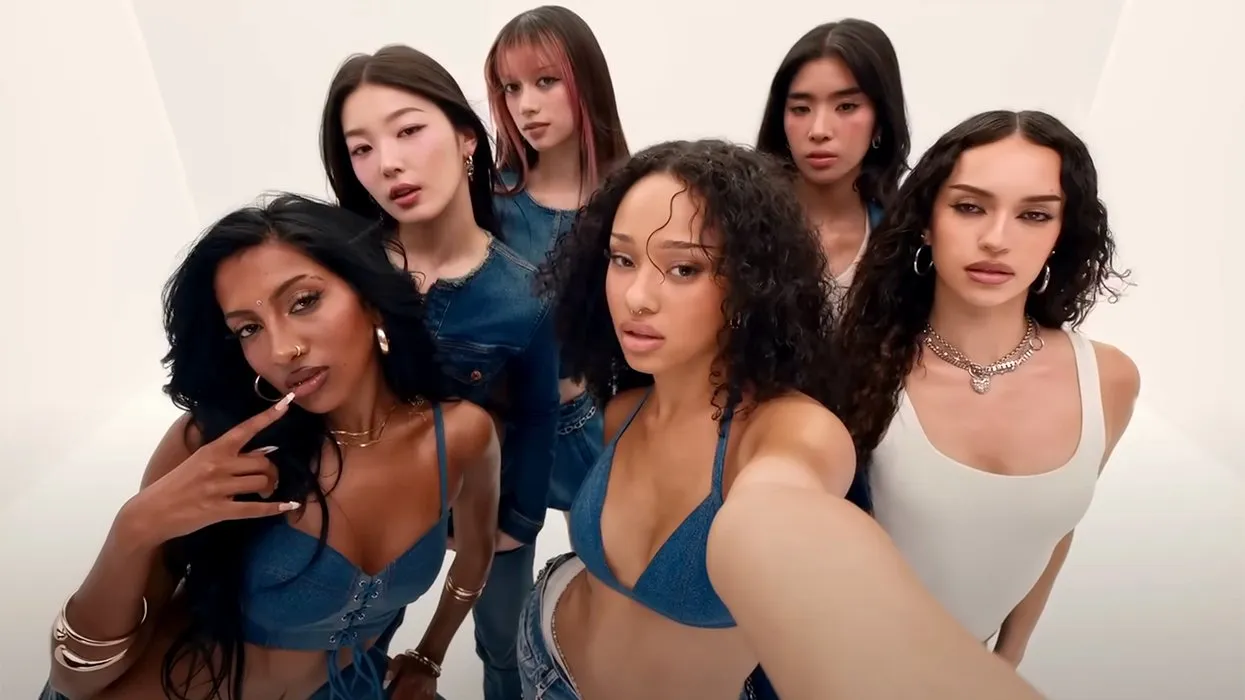
The contrasting results of Gap’s KATSEYE campaign and American Eagle’s Sydney Sweeney collab offer clear lessons for fashion marketers.
First, cultural relevance matters more than star power alone.
While celebrity endorsements can generate temporary attention, aligning with movements, fandoms, or communities creates lasting engagement.
Gap tapped into K-pop’s global momentum, connecting authentically with Gen Z consumers who value inclusivity, diversity, and shared experiences.
Second, storytelling and interactivity are crucial.
Their campaign encouraged fans to participate through social media shares, fan edits, and hashtag challenges, turning consumers into active promoters.
American Eagle, in contrast, relied on a traditional top-down approach, missing an opportunity to foster community engagement.
Related to K-pop:
TWICE Makes History: First K-Pop Girl Group To Headline Lollapalooza