

Every year on April 1st, people around the world engage in playful pranks, clever jokes, and lighthearted hoaxes, all in the name of April Fools’ Day.
But have you ever stopped to wonder how this quirky tradition began?
What started April Fools’ Day, and why has it endured for centuries, spreading across cultures and continents?
Let’s dive into the history of this mischievous holiday and explore why it remains such a beloved (and sometimes controversial) part of modern life.
What Started April Fools’ Day? The Historical Roots Of A Playful Tradition
Source: Reddit
The exact origins of April Fools’ Day are shrouded in mystery, but historians believe its roots can be traced back to ancient festivals celebrating renewal and mischief.
One theory points to the Roman festival of Hilaria, which was held in late March to honour the goddess Cybele.
During Hilaria, Romans would dress up in disguises, play games, and celebrate with laughter and joy, a precursor to the playful spirit we see today.
Another popular theory ties April Fools’ Day to the shift from the Julian calendar to the Gregorian calendar in 1582.
Before this change, many European countries celebrated the New Year around the end of March or early April, coinciding with the spring equinox.
However, when Pope Gregory XIII introduced the new calendar system, the start of the year was moved to January 1st.
Those who clung to the old calendar or were unaware of the change became targets of ridicule, earning them the nickname “April Fools.”
Why Is April Fools’ Day Still Celebrated Today?
A Universal Love For Laughter
One reason April Fools’ Day has stood the test of time is its universal appeal.
Humour transcends language barriers, cultural differences, and generational gaps, making it easy for people everywhere to participate.
Whether it’s a harmless prank at home, an elaborate office joke, or a viral internet hoax, April Fools’ Day taps into our shared love for laughter and surprise.
In today’s fast-paced, often stressful world, the day offers a brief reprieve.
April Fools’ Day is a chance to let loose, embrace creativity, and connect with others through shared amusement.
For many, it’s less about fooling someone and more about fostering camaraderie and joy.
How Media And Technology Have Amplified Its Reach
Modern technology has played a significant role in keeping April Fools’ Day relevant.
Social media platforms like Twitter, Instagram, and TikTok have turned pranks into global phenomena, allowing users to share their antics with millions of people instantly.
Memes, videos, and hashtags related to April Fools’ Day trend annually, creating a sense of collective participation.
Corporations and media outlets have also embraced the tradition, using the day as an opportunity to showcase their creativity.
Tech companies like Google and YouTube are notorious for pulling elaborate hoaxes, such as announcing fake products or features (remember Google’s “Gmail Paper” or YouTube’s “RickRoll” experiment?).
How April Fools’ Day Has Evolved Across Cultures
Source: The King’s Page
While April Fools’ Day is widely celebrated in Western countries, its customs vary significantly around the world.
In France, it’s known as Poisson d’Avril (April Fish), where children tape paper fish to unsuspecting victims’ backs and shout “Poisson d’Avril!” when discovered.
In Scotland, the tradition spans two days: Huntigowk Day involves sending people on ridiculous errands, while the second day focuses on practical jokes.
Even regions without a historical connection to April Fools’ Day have adopted the practice in recent years, thanks to globalisation and the influence of Western media.
For example, in Japan, where formal etiquette traditionally reigns supreme, April Fools’ Day has gained traction among younger generations eager to embrace its playful spirit.
This adaptability is one of the reasons April Fools’ Day continues to thrive.
Rather than adhering to strict rules, it encourages participants to tailor the tradition to their own cultural context, ensuring its longevity.
Real-Life Examples Of Famous April Fools’ Pranks Through History
Source: Facebook
Some of the most memorable April Fools’ pranks have become legendary, showcasing just how far people will go to pull off the perfect joke.
In 1957, the BBC aired a now-infamous segment called the “Spaghetti Tree Hoax,” claiming that Swiss farmers were harvesting spaghetti from trees.
Thousands of viewers fell for the prank, with some even calling in to ask how they could grow their own spaghetti trees.
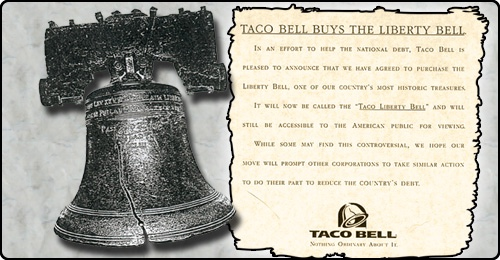
In 1996, Taco Bell announced it had purchased the Liberty Bell and planned to rename it the “Taco Liberty Bell.”
The public outcry was immediate until the company revealed it was all a joke later that day.
More recently, in 2013, Netflix launched a faux campaign promoting a service called “Netflix & Smell,” promising users the ability to experience scents alongside their favourite shows.
Fans were both baffled and amused by the absurdity of the idea.
These examples highlight the ingenuity and humour that define April Fools’ Day, proving that a well-executed prank can leave a lasting impression.
The Dark Side Of April Fools’ Day: When Jokes Go Too Far

Source: Reddit
While most April Fools’ pranks are harmless fun, some have crossed the line into dangerous or unethical territory.
Fake news stories, misleading announcements, and overly elaborate schemes can sometimes cause confusion, panic, or harm.
For instance, in 2019, several Indian news outlets reported that the government had banned instant messaging apps like WhatsApp as part of an April Fools’ prank.
The false report sparked widespread concern and frustration before being debunked.
Similarly, workplace pranks gone wrong can damage relationships or create hostile environments if not handled sensitively.
To keep the spirit of April Fools’ Day alive, it’s important to strike a balance between creativity and responsibility.
A good rule of thumb?
Make sure your prank is funny and not hurtful, harmful, or disruptive.
Related To April Fools:
April Fool’s Day 2020: To Prank or Not to Prank?
[2023 Updated] 30 Inappropriate, Dirty, and Funny Kahoot Names to Use